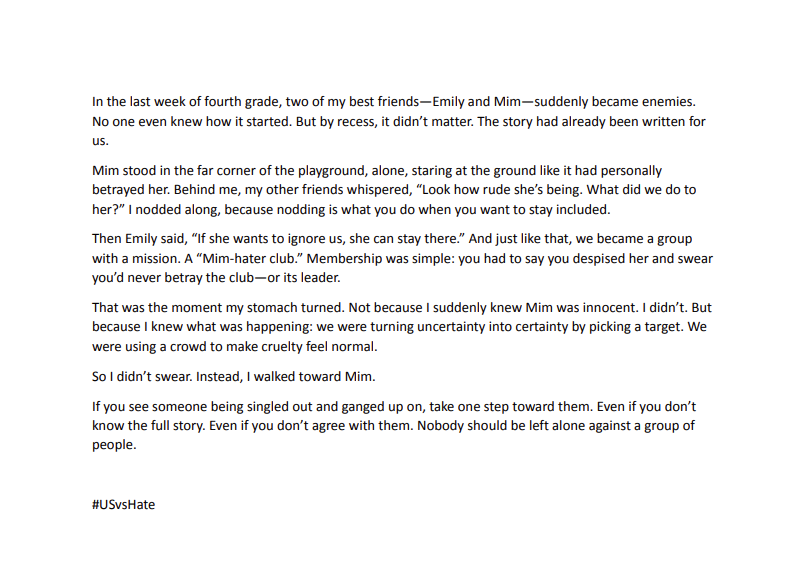
The following are the fabulous winners and finalists for the Spring 2026 #USvsHate contest! We asked youth, educator, and community voters: Which do you most want amplified in schools and publicly?
In #USvsHate, we define “hate” as any time people denigrate, disrespect or harm an individual or group as if their identity makes them an inferior or less valuable type of person. By amplifying “anti-hate” youth voices in schools and publicly, we seek to empower students to build schools and a society where all belong, feel included, and get supported.
Winners
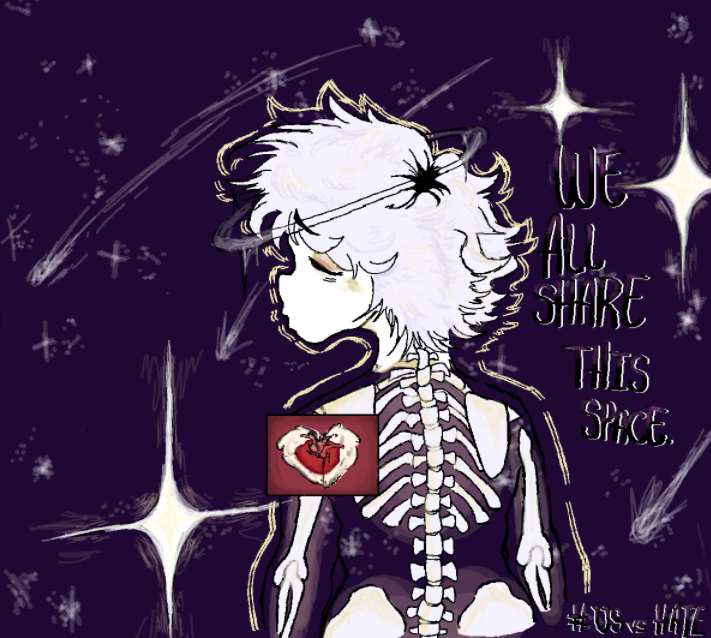
Anonymous, Grade 9, California
Anonymous writes: “Something that really upsets me and I could go on and on for hours about is the amount of hate and negative things people spit at each other nowadays. I, personally, could care less about who you are and what you represent yourself as because at the end of the day, we all bleed red. We’re all human, and we all share this entire space (the world) with each other no matter what. So what’s the point in shutting somebody down for wanting to appear a certain way? This isn’t even something recent – for years somebody’s always had something to say about another person, whether it be something they can or can’t control.”
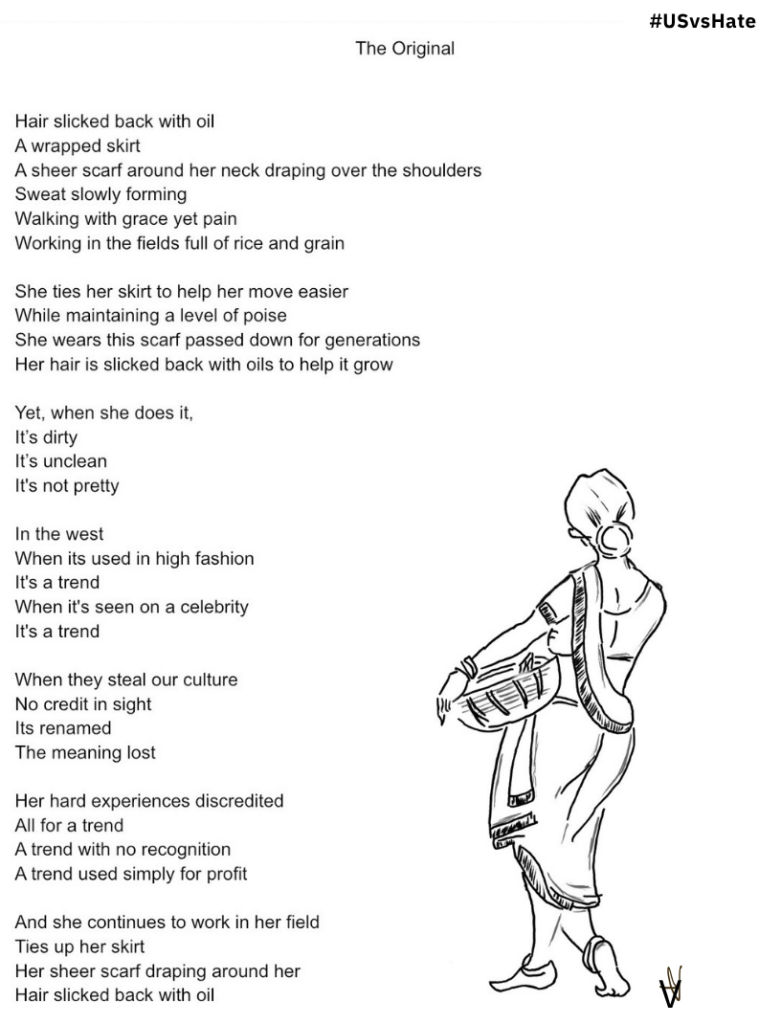
Varnika, Grade 11, Florida
Varnika writes: “I wrote this to highlight how cultural appropriation in fashion often ignores that traditional styles were born from necessity and survival, not just a desire to look ‘beautiful.’ It is painful to see my community’s traditions stripped of their meaning and turned into profit-driven trends without any credit or appreciation for the original creators. I believe students should learn the deep history and purpose behind global garments so we can move from ‘consuming’ a culture to actually respecting it. By honoring the original context, I hope to ensure that others see the passion, labor, and heritage behind what they might otherwise dismiss as a passing trend.”
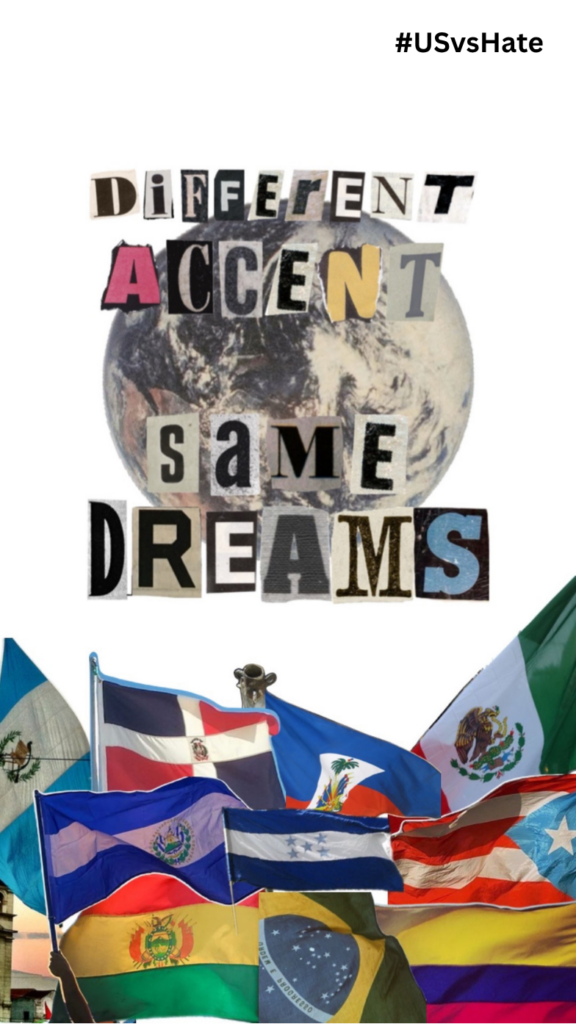
Anonymous, Grade 9, California
Anonymous writes: “I made my poster to address xenophobia and the way people are being judged and treated especially recently because of their accent or where they come from. ‘Different Accent, Same Dreams’ means that someone having a different accent than someone else doesn’t mean they don’t have goals, intelligence, worth, or dreams to accomplish. I think this message is important because many people face xenophobia in schools and work which are places people should feel safe and included in because no one should feel like they don’t belong no matter their cultural background. By promoting the understanding of the seriousness xenophobia is, we can create classrooms that are welcoming and respectful to everyone.”
Anonymous, Grade 1, California
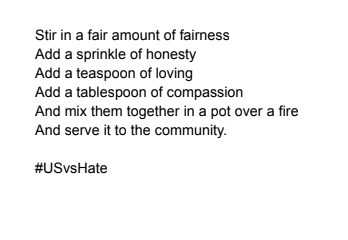
Their teacher explains: “The first graders in my class read and studied the poem: Peace: A Recipe by Anna Gossnickle Hines. We learned more about recipes and what kinds of measurements are found in them. Then students wrote their own kindness recipes.”
Anonymous, Grade 9, California
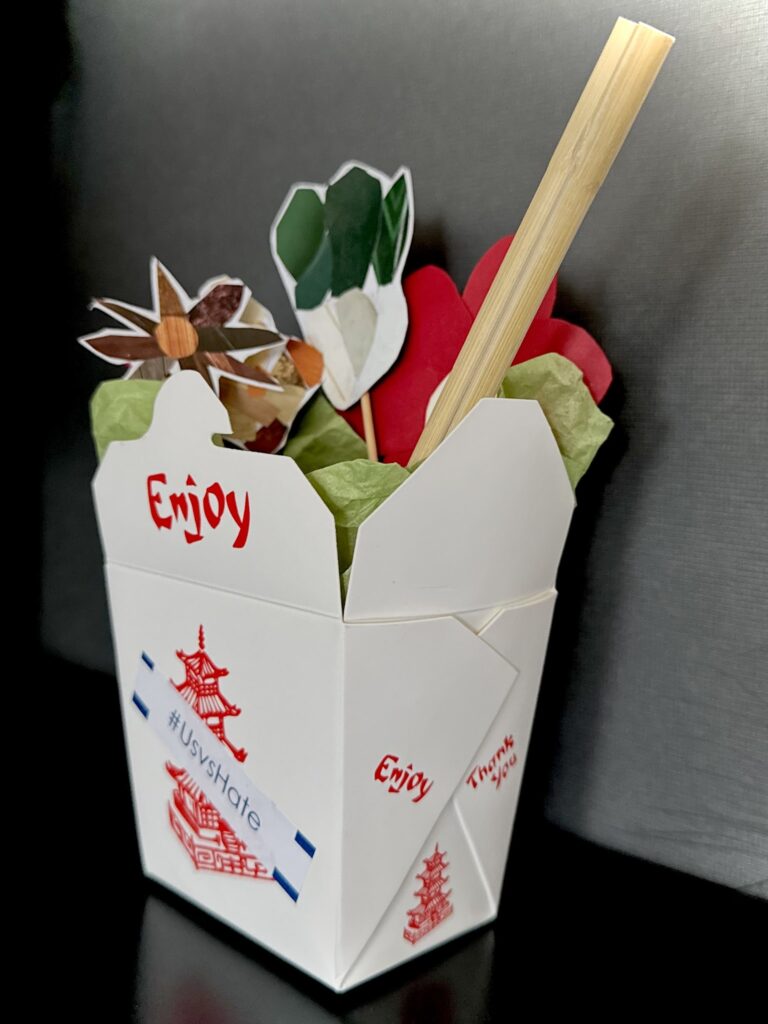
Anonymous writes: “I was born Chinese-American. One of my earliest memories is of my grandma cooking dinner. My family would always be stocked with bok choy, ginger, and some sort of special spice, like star anise. As someone learning to understand their identity, I realized that food brings us together; it teaches us to respect other cultures in ways that words can’t. I created this piece, ‘Bouquet of 食物’ (the Chinese word for ‘food’), as a peace offering. With this atypical bouquet, I hope to bring awareness to anti-Asian hate and racism by demonstrating how cultures can blend into something beautiful. The takeout box, disposable bamboo chopsticks, and fortune cookie slip have become recognizable objects in Chinese-American restaurants as a result of both Chinese and American influence. The bouquet’s wrapping paper is green, which symbolizes harmony in Chinese belief.”
Anonymous, Grade 9, California
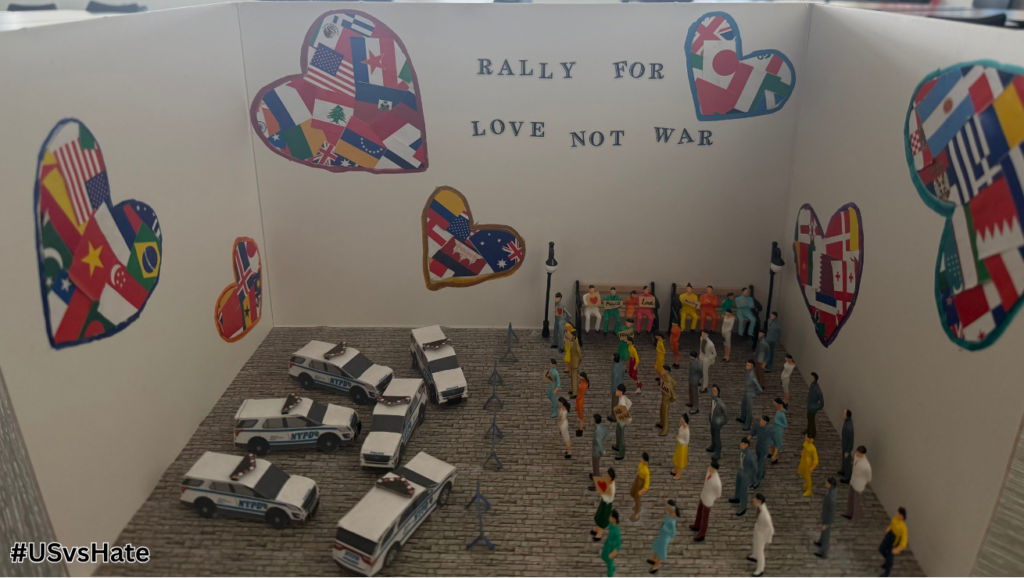
Anonymous writes: “Through my model, I want to emphasize the message: ‘Rally for Love, Not War.’ Every country should choose understanding and love over the use of bombs, guns, and violence. This message is very important for me as it is very sad to see and hear from the news how many lives are lost when one country attacks another, maybe due to different beliefs and principles. This should stop! Countries should choose to connect and cooperate rather than thinking of their own selfish political motives for the greater good of their citizens.”
Anonymous, Grade 9, California
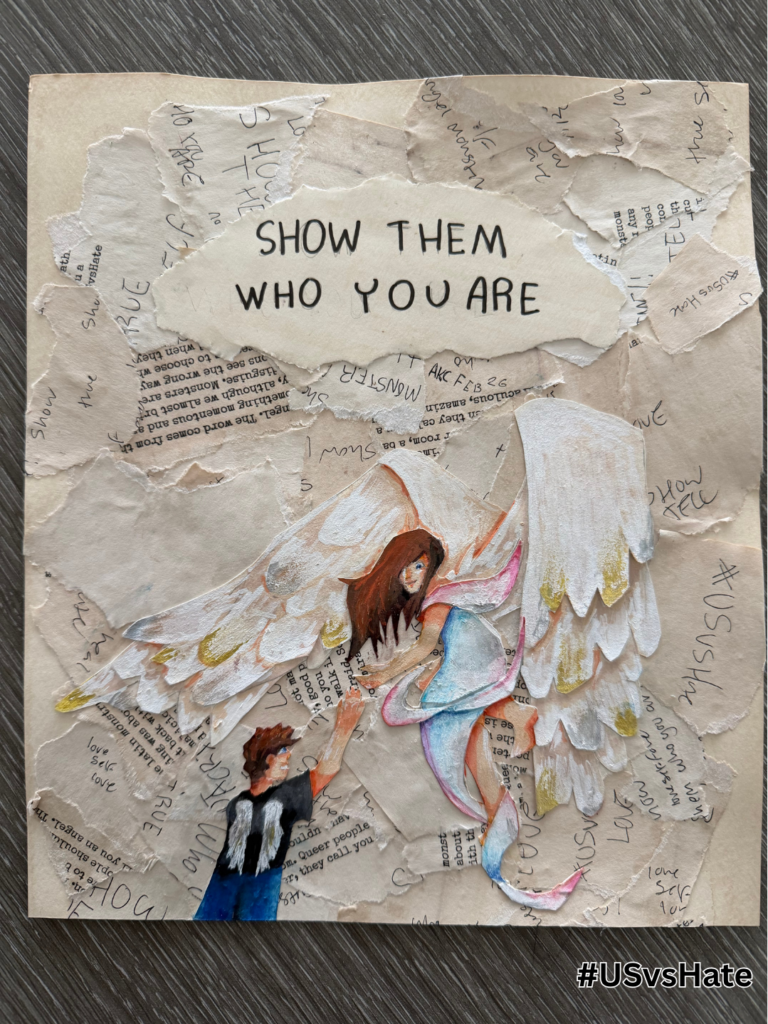
Anonymous writes: “This piece is a message against hate, yes, but it’s also a message for love, or more specifically self-love and acceptance. A message telling every queer person to be proud of themself. I chose this message because I myself am genderfluid, but I was never really given a term for it. It took me a long while to come out because I didn’t have a word for myself – the closest I ever got to it was transness, and still I felt that didn’t quite fit. I felt awkward, like I didn’t fit in the box I was given – and, ironically, I didn’t fit in the box for people not fitting in the box. I wasn’t proud of myself, and I hated that feeling – it was like I didn’t belong anywhere! And I didn’t want anyone else to feel that way. I also built this project around something I’d heard a while ago – that the word monster comes from Latin ‘monstrum,’ which means a miracle or portent, a divine sign that something miraculous was about to happen. I thought a lot about that, about people who misinterpreted things because they were afraid of what they didn’t understand, and people who didn’t understand themself. People who were afraid of showing themself. This piece was made to empower those people, to give them the hope and the strength to remind them that even if they’re afraid, even if they’re not completely sure, they should show the world who they are, and be proud about it.”
Finalists
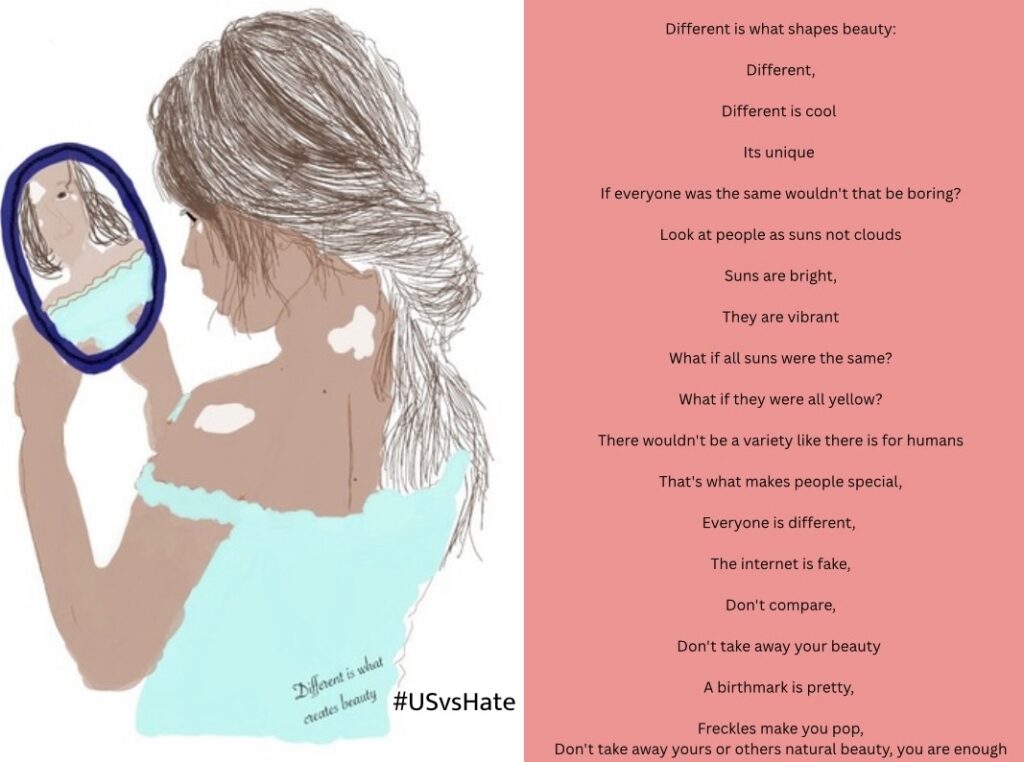
Olivia, Grade 9, Maine
Olivia writes: “When I turned into my teenage years I thought that there was a certain standard that I needed to look like. But as I grew up I found lights and pretty things in me that others may not have. Personally I don’t want anyone to think that there is a standard we should look like. That’s all fake and everyone has lights, and those should be brought out more in schools, a little compliment can go along way.”
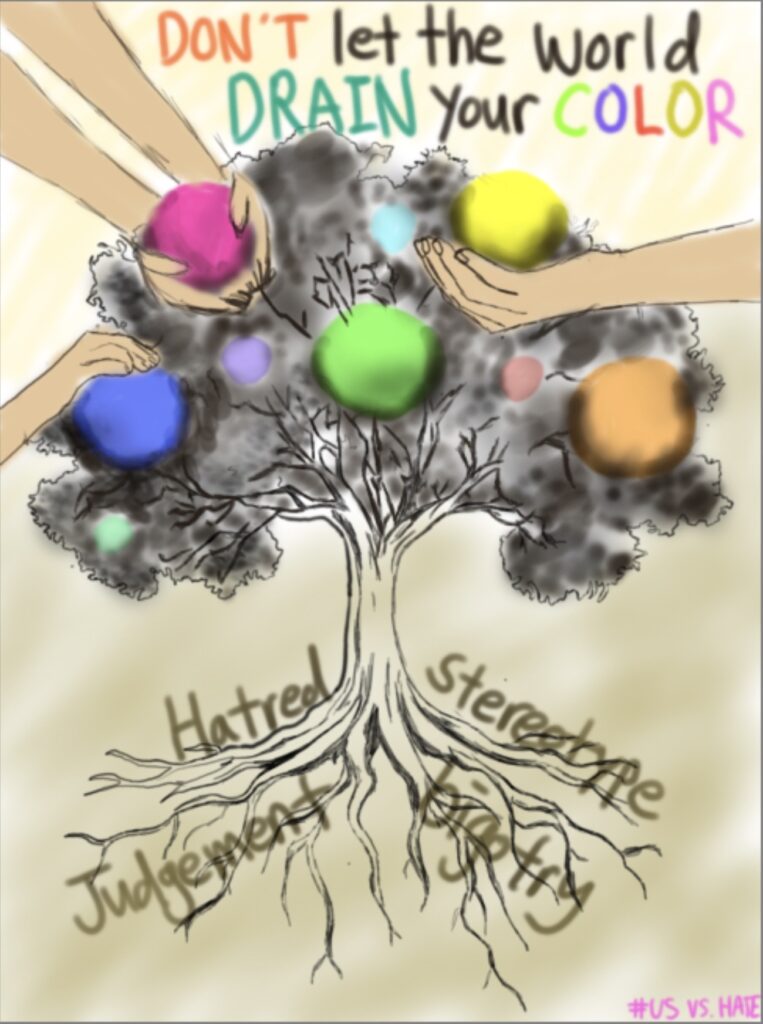
Seoyun, Grade 12, California
Seoyun writes: “We all carry our own unique ‘color,’ no matter where we are or who we are with. That color is not simply our physical appearance, but our personality, values, culture, race, and the stories that shape our identity. Yet, society often drains these colors of their life through stereotypes, judgment, and bigotry, pushing individuals toward achromatic uniformity. This poster expresses the importance of preserving our own color while equally respecting the colors of others. When vibrant and diverse fruits are allowed to shine together in harmony, society becomes brighter, stronger, and more beautiful.”
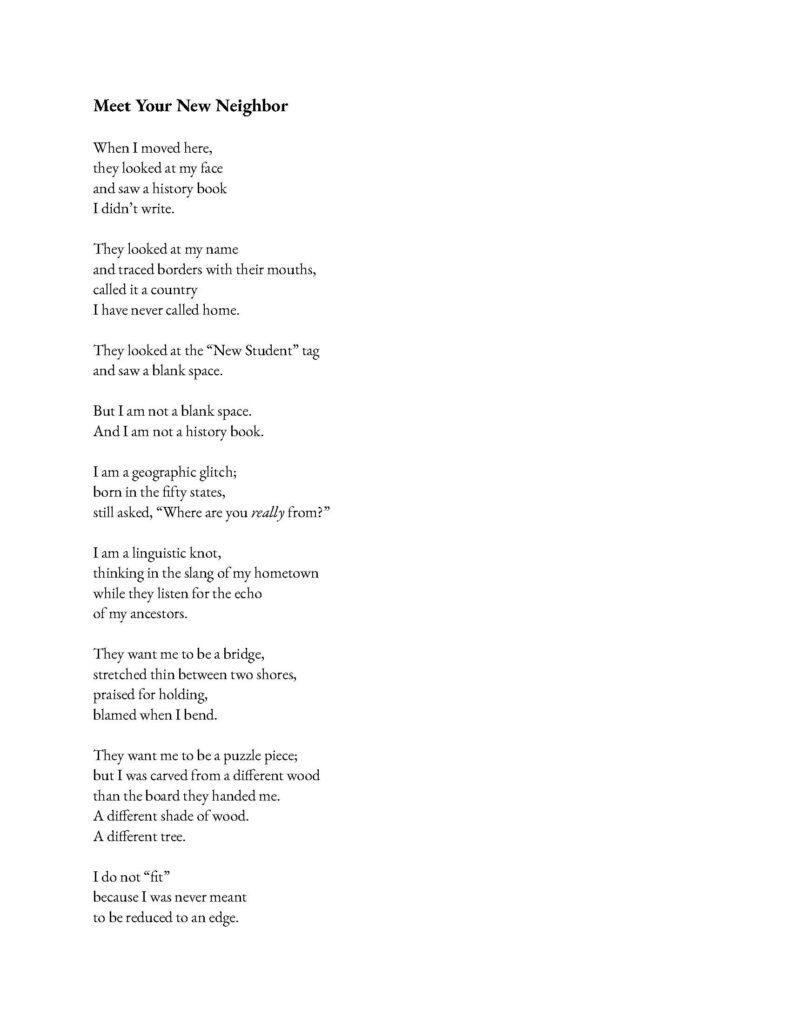
Shreyashi, Grade 10, New York
Shreyashi writes: “As an Indian-American born in the U.S., I am often asked where I am ‘really’ from, which inspired my metaphor of being a ‘geographic glitch.’ My intention is to show that identity isn’t a ‘choice’ between two shores, but a beautiful, seamless gradient of both. I believe students should learn that ‘belonging’ isn’t about fitting into a pre-cut puzzle piece, but about being seen for our individual, multi-layered stories. By sharing this, I hope to encourage my peers to look past labels and see the person standing right beside them.”
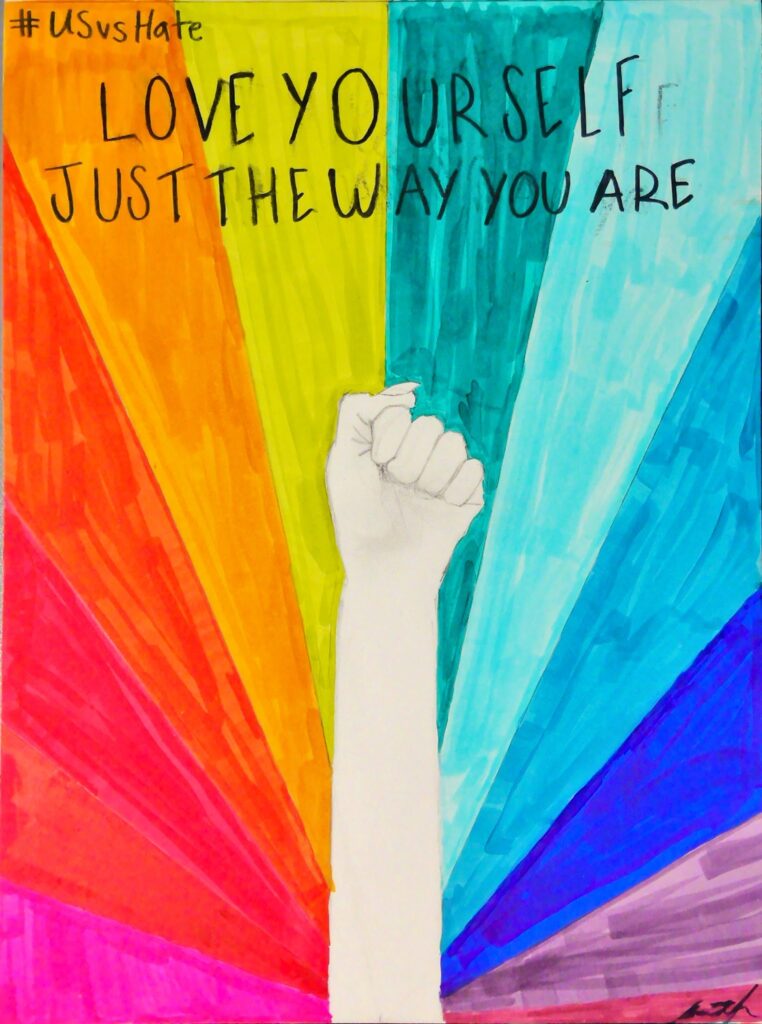
Bani, Grade 7, Florida
Bani writes: “People shouldn’t hate themselves because of other people. Instead, they should love themselves because they are good just the way they are.”
Kimmy, Grade 4, California
Kimmy’s teacher explains: “For our study of Chile we learned about arpilleras, a South American textile. Women in Chile during the Pinochet regime made them to protest government cruelty including family members who had been taken away by the government. Students took the art style and used it to talk about a group that was being targeted that they wanted to uplift.”
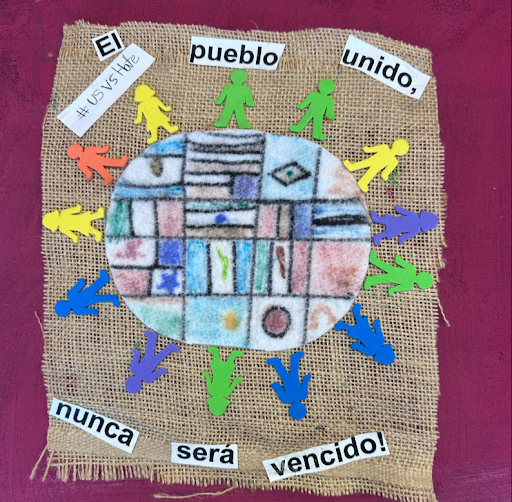
Anonymous, Grade 9, California
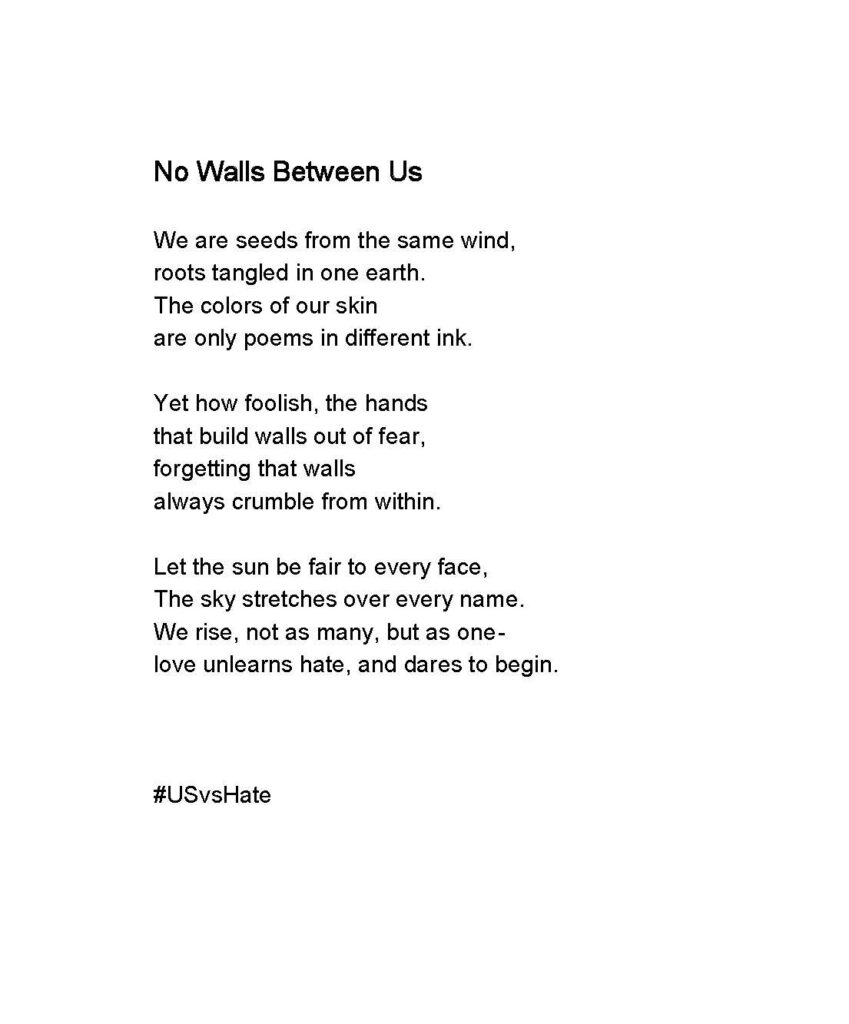
Anonymous writes: “The poem ‘No Walls Between Us’ urges equality and unity. It says all people share the same roots, and our differences-like skin color-are just ‘poems in different ink.’ The ‘walls built out of fear’ represent discrimination, which ultimately destroys those who uphold it. The ending envisions a fair world where everyone stands equal under the same sky.”
Julian, Grade 7, California
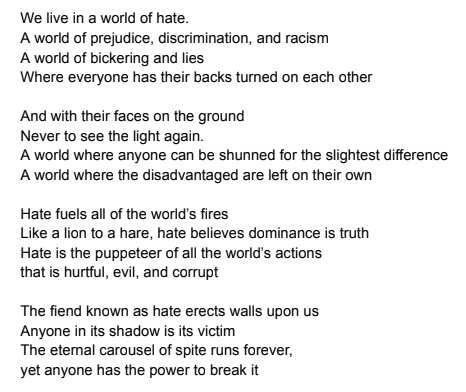
Julian writes: “Our world is filled with lots of hate. From bullying in schools to straight up racism, I was inspired by the world’s most tragic stories and tales to write my poem. I would encourage schools to educate students on topics like bullying for students to understand the true gravity of topics like these. Everyone should feel safe, welcome and valued anytime and anywhere.”
Anonymous, Grade 1, California
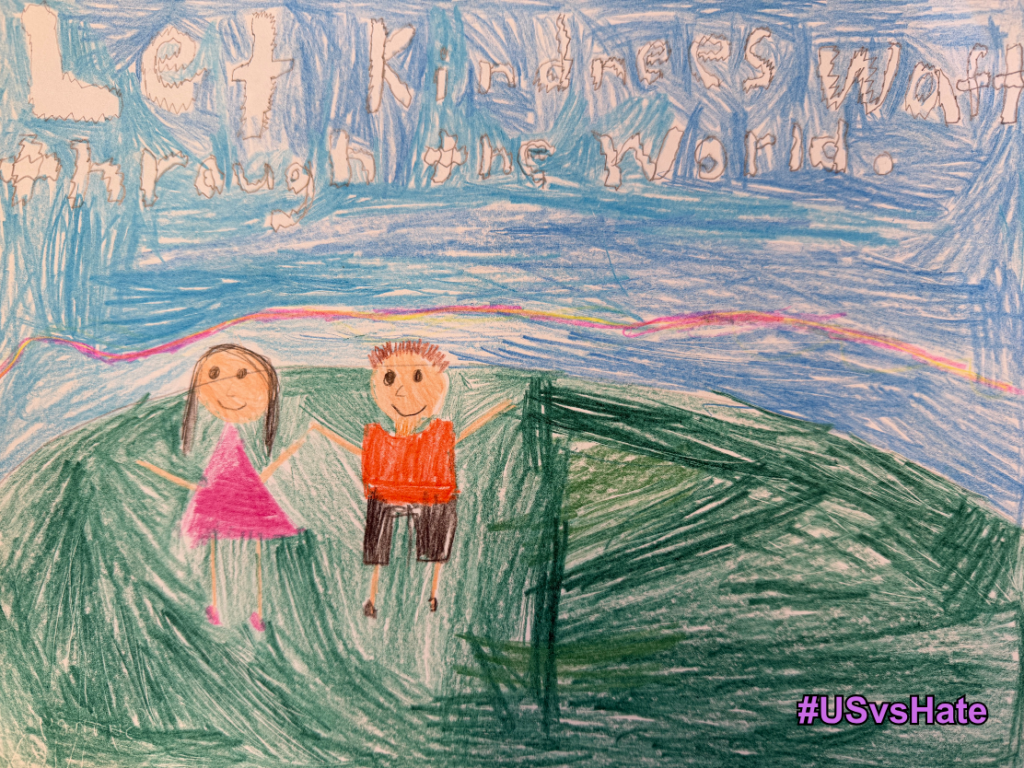
Their teacher explains: “After reading Say Something by Peter Reynolds and The Artivist by Nikkolas Smith, first graders brainstormed 6 words to help the world. They then created a poster to highlight their words and included them in their poster.”
Iker, Grade 6, California
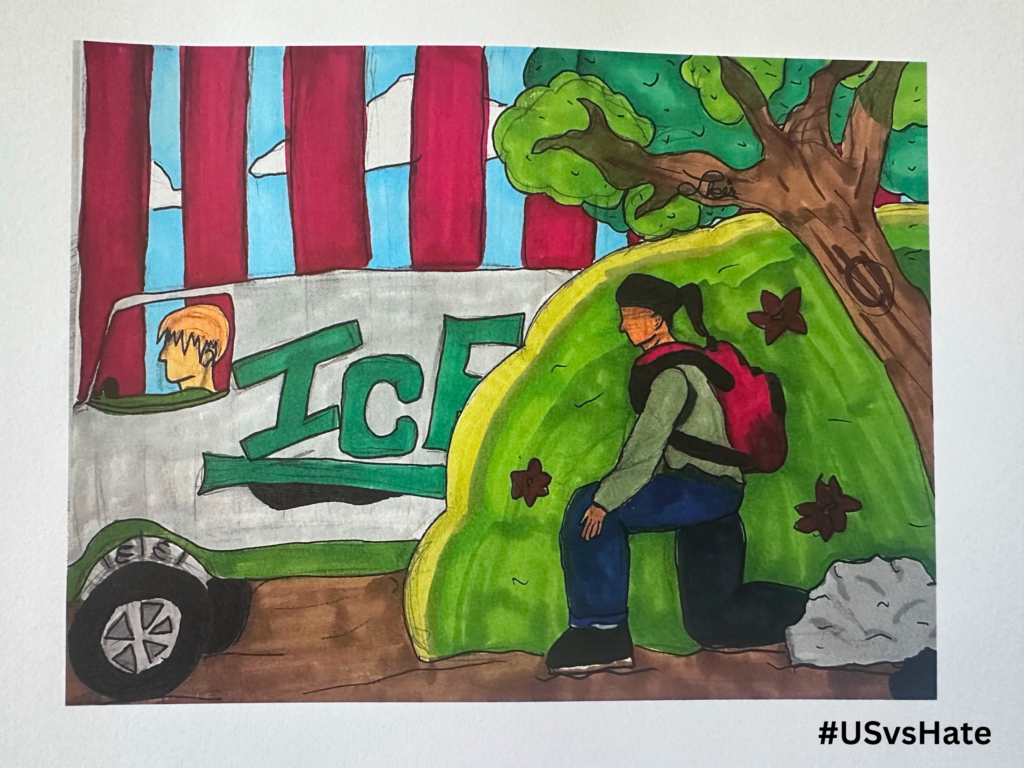
Iker writes: “People shouldn’t have to suffer to get a better life. It is important to me because I experienced this coming to the United States. I made a picture of someone crossing the border to have better opportunities.”
Anonymous, Grade 9, California
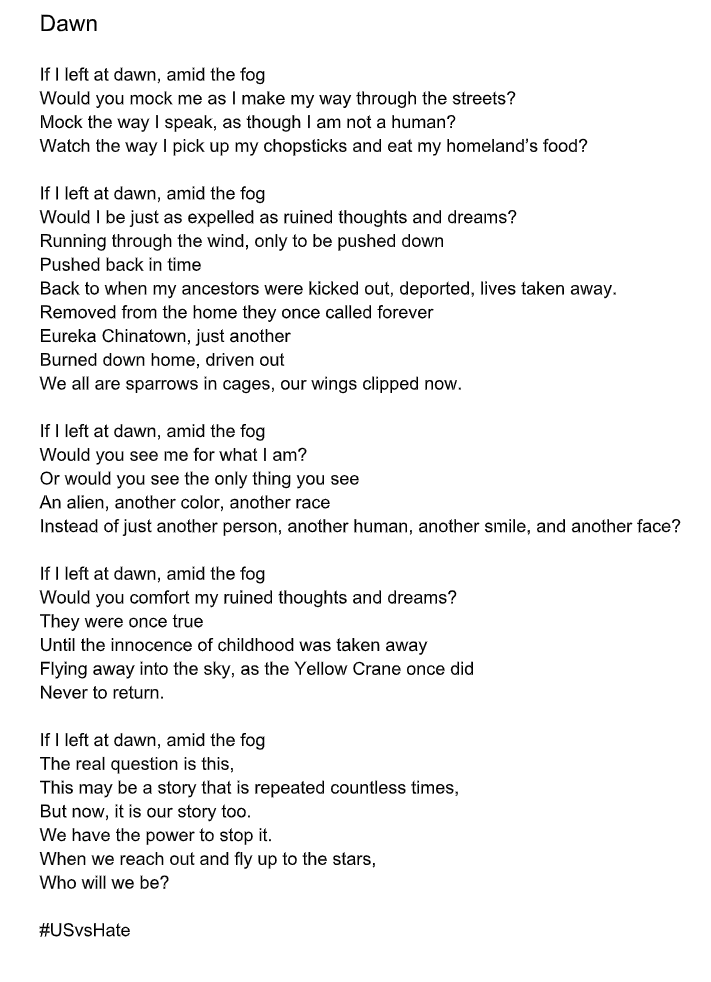
Anonymous writes: “My poem, ‘Dawn’, starts with a tone of unhappiness, representing the discrimination of the AAPI people and what they face everyday due to racism. Throughout the poem, there are thoughts sprinkled in, such as, ‘Would you comfort my ruined thoughts and dreams?’. These signify the things we wished to do in our youth, but were pushed back from in teen or adolescent years because of the color of our skin. Another thought I added was ‘Back to when my ancestors were kicked out, deported, lives taken away.’ The reason I added this was because last year, I learned about the Chinese’s expulsion from Eureka in 1885. Hearing about how my ancestors got their lives taken away and their homes burned down, my heart was filled with sorrow for the people of my past, knowing that they could do nothing but watch as people were lynched by the hateful mob of Eurekans who cornered and forced the to the wharf. Finally, the last stanza is a paraphrased version of one of my favorite quotes from my conductor and his recent work of music, Echoes of Eureka, ‘This is an old story, but it is your story too. When you carry it away into the world, who will you be?'”
Conversation Starters
Conversation starters are #USvsHate messages that we think can spark dialogue in school communities, in addition to messages that largely inspire us. Remember, in #USvsHate, we define “hate” as any time people denigrate, disrespect or harm an individual or group as if their identity makes them an inferior or less valuable type of person. By amplifying “anti-hate” youth voices in schools and publicly, we seek to empower students to build schools and a society where all belong, feel included, and get supported.
Anonymous, Grade 9, California
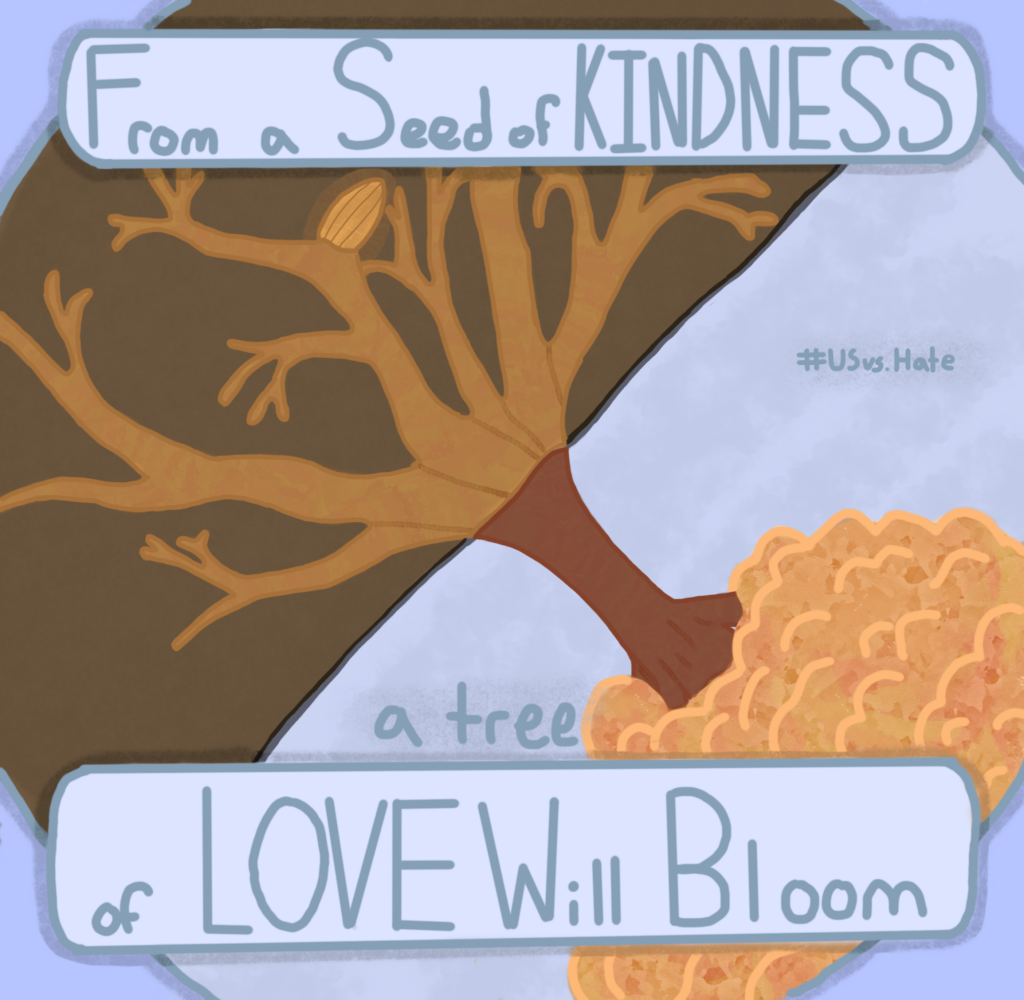
Student Backstory: “It’s not easy to choose just one group that has been wronged because no one group is more or less justified in the feeling of pain upon being wronged. In fact, pain is one thing, among many, that all humans have in common. But pain is just one of the things that apply to all humans. It is immensely important to realize that despite how different we all seem, and the fear that may come from those differences, we are all human. And among these many fundamental similarities is our capability for great kindness and togetherness. So if given a choice, we can choose to be kind. We can choose love over hate, again and again and again. We can establish kindness as the bare minimum, as it should be.
I think a great symbol for how love can be spread is a tree. From a seed of kindness a tree of love will bloom. If we make the choice to be kind, we expand the branches of this metaphorical tree and inspire others to be kind as well. Then if we continue to make an effort to be kind and spread love, it’s like watering the tree and tending to it so it can extend its roots. And once those roots are extended, it will be harder to rip up the tree and undermine the love with hate. So if we all take the simple action of choosing kindness, we can plant a whole forest.”
Suggested Prompt: What’s one “simple action” someone in your school could take to plant a “seed of kindness”?
Anonymous, Grade 9, California
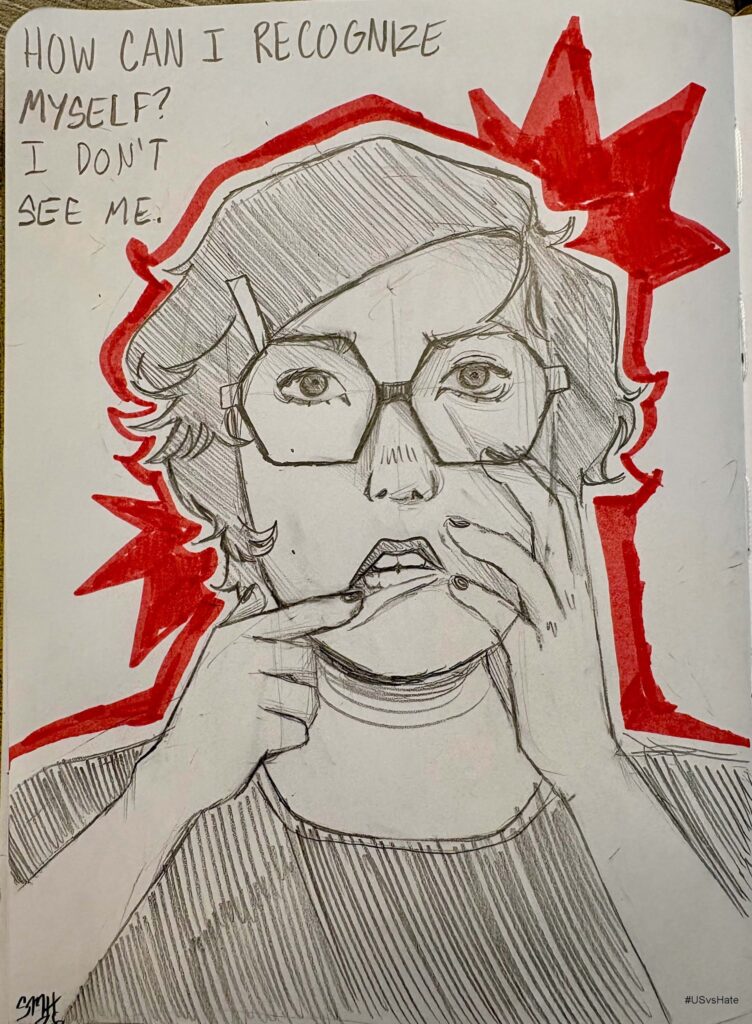
Student Backstory: “Growing up as a mixed kid, I never really saw myself reflected in the media I consumed and the people I grew up around. I was stuck between two pieces of my identity: Chinese and White. Parts of me reflected the people around me, but not every part. I felt like a collage. This project reflects the feeling of needing to change yourself to fit in. Trying, so desperately, to find a place that you fit in perfectly without having to change yourself. Looking in the mirror and not knowing who you are because you have squished yourself into a mold that was not made for you. This project is for the kid who was told constantly that they were not ‘Asian enough.’ This project is for the kid who was treated like an outsider no matter where they were. This project is for the mixed kids, the ones who cannot seem to merge the two parts of their identity no matter how hard they try.”
Suggested Prompt: What learning in schools could support students to learn more about honoring their many identities?
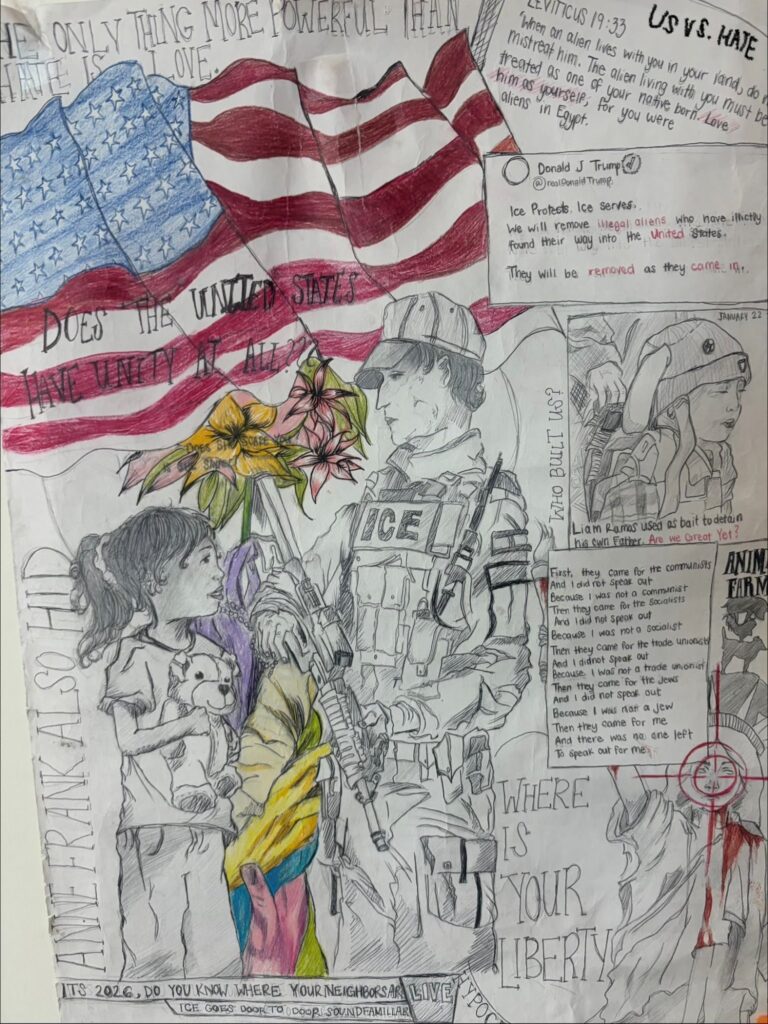
Nia, Grade 10, California
Student Backstory: “I made this piece hoping to portray the love, unity, and liberty our country desperately needs as of today – using primary examples of injustice and irony within America’s constitution. As a Mexican and Samoan American raised in San Diego, I have witnessed and lived through the quilt of diversity and culture our country represents, for we are built upon immigrants. From our fields to its soil — we are not the United States of America without unity and diversity. I am hoping the education system improves on giving stories equal recognition, without silencing our immigrants — for we all bleed red, and we shouldn’t have to bleed to prove that.”
Suggested Prompt: What’s one way your own school could “improve on giving stories equal recognition” like this author recommends, including the stories of immigrants past and present?
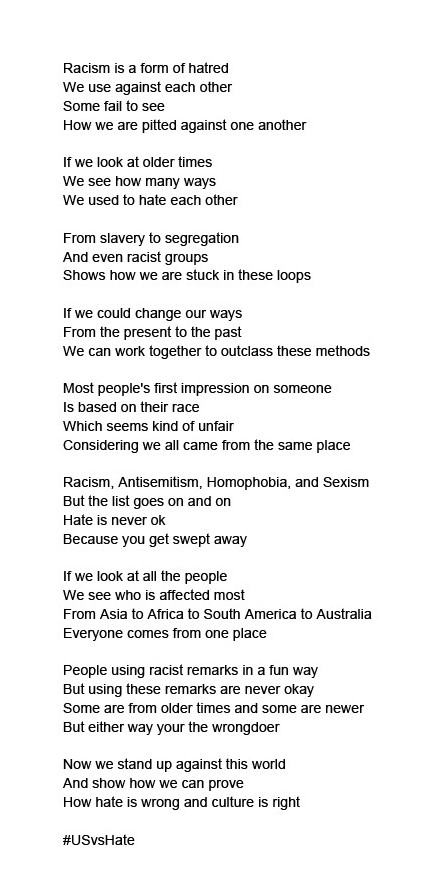
Anonymous, Grade 9, California
Student Backstory: “When I first heard about the #USvsHate project I thought this would be a great idea to express myself on the topic of hate. Hate can be categorized as many things, like sexism, racism, and other forms of hate on specific cultures, but also people use hate just to say they don’t like something. This confused me at first because it feels like hate has 2 meanings, a really horrible one and a casual one which kind of makes no sense if you think about it. It’s kind of like multiplying and dividing fractions. I think the main reason why I made a poem was because the ideas just flowed naturally to my head. Hate is everywhere in the world, which gave me multiple ideas on how to start this poem. One of the biggest forms of hate in the world is racism, which is what I wanted to start the poem on, it was a good base and it helped me build into a bigger and better poem. If I could change one thing about how everyone in the world thinks it might be how our first impressions on people isn’t our race. #USvsHate is a great movement that I think more people should follow, #USvsHate and thank you for reading my poem.”
Suggested Prompt: Check out resources on usvshate.org to see how old hateful ideas continue to plague us, even in our “jokes.” What might you do next time somebody makes a racist remark as if it’s “funny,” to point out that it’s never “funny” to talk that way?
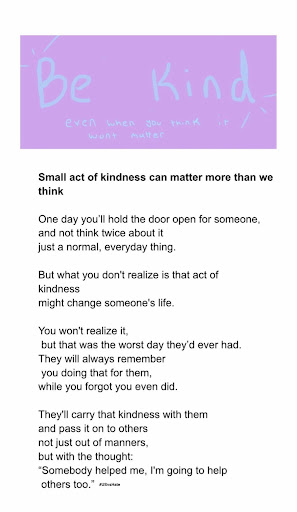
Ava, Grade 9, Maine
Student Backstory: “I always hold the door open for people when I have the chance, I feel like its a nice thing to do and you never know what someone is going through during that moment, like if they weren’t having a good day and I didn’t hold the door for them they would have a even worst day, and I don’t want to be the reason for that.”
Suggested Prompt: Can you think of a time when someone did something seemingly insignificant for you that made a difference? Have you done something small for someone that may have helped them in ways you may never know?
Finalists
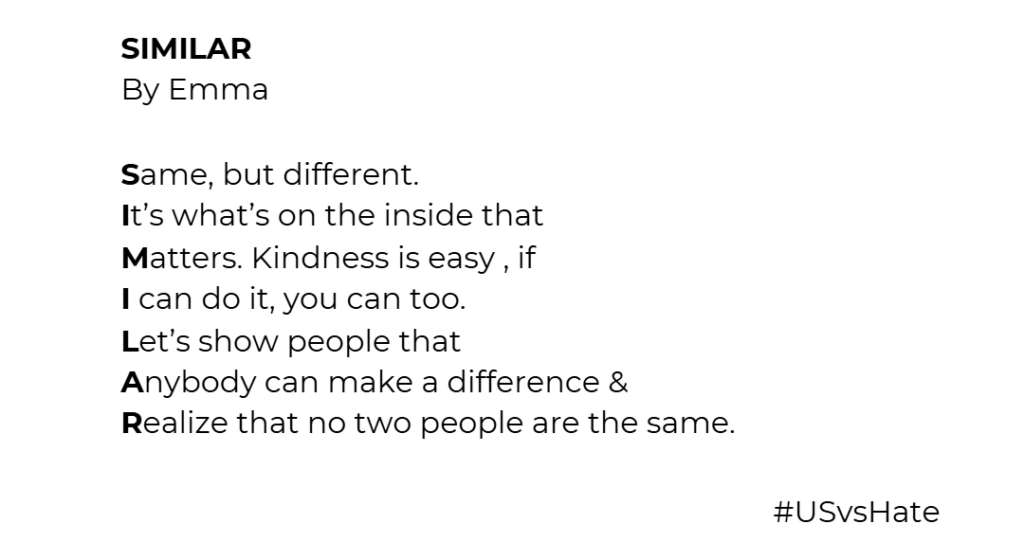
Emma, Grade 7, Wisconsin
Student Backstory: “This poem represents that everybody is unique in their own way and I’m hoping more people can accept that.”
Suggested Prompt: What’s one way we can learn in schools that folks are “the same” and “different” at the same time, and so, “similar”?
Cena, John, & Noah, Grade 10, California
Teacher Backstory: “We love US vs Hate! With the extended deadline this year, we were able to complete an additional lesson and continue our traditional 10th grade AVID Gallery Walk and Peer Voting. Our message mediums varied from traditional poster art to crochet, video to sculpture. Our students are excited about expanding our gallery in the future!”
Suggested Prompt: If you were going to write a caption for this “anti-hate” message, what would it be?
Emerson, Grade 5, Colorado
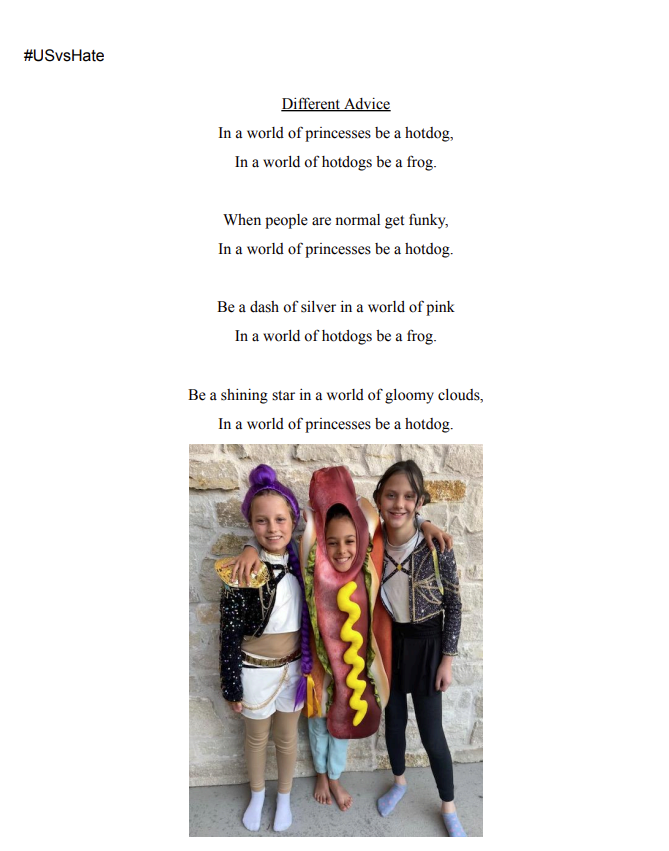
Student Intention (explained by parent): “All of Emerson’s friends decided to be characters from the movie KPop Demon Hunters. Emerson is on the Student Leadership Board of her school and created a kindness initiative. She wanted to show the younger kids that you can be who you want to be instead of having to follow the crowd. So for Halloween, Emerson went as a hot dog, and trick or treated with all of her friends in Kpop Demon Hunter costumes.”
Suggested Prompt: Imagine that you are putting “anti-hate” posters around your school. How would you complete the classic “in a world of ___ be a ___” phrase with #USvsHate in mind?
Amalia, Grade 11, New Jersey
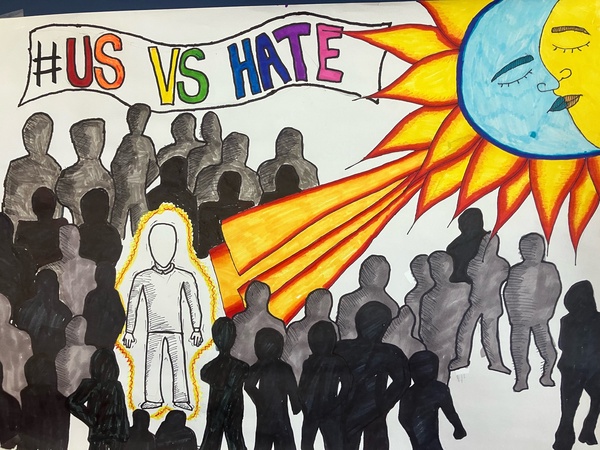
Student Backstory: “If you see someone being singled out and ganged up on, step toward them. Even a small act of support can make a difference. Make that choice whether you agree with them or not. No one deserves to stand alone against a crowd.”
Suggested Prompt: What’s one thing you could do to offer a “small act of support” to someone “standing alone against a crowd” in your school?